SEO isn’t disappearing. It’s getting harder to fake. Results pages now mix classic links with AI-generated snapshots, video blocks, shopping modules, and visual search tools. Google describes AI Overviews as an AI snapshot that includes links to explore sources, which means some questions get answered before a person ever clicks. People also start discovery in more places: social feeds, community forums, and chat-style assistants shape what readers see and trust before they land on your site.
If you run marketing for a business, the practical move is to update what you publish, where you publish it, and how you measure success. Use this 2026 checklist as a starting point.
1) Map discovery beyond the “Google-only” mindset
Search is now a network of routes. A buying decision might start with a short video, continue in a Reddit thread, then end with a Google query right before someone purchases. Visual search fits into that mix too. Google says people use Lens for nearly 20 billion visual searches each month, and a meaningful share relates to shopping.
What to do:
- Audit your top customer questions across YouTube, Reddit, and Google results.
- Build at least one format that fits each channel (video for demos, a written page for reference, and a forum-friendly answer for community sharing).
- Track brand mentions and referrals, not only rankings.
2) Swap content volume for proof of real experience
AI can summarize generic explanations in seconds. The pages that keep earning attention tend to show evidence: a test, a comparison, an interview, or a clear opinion backed by facts. Google’s advises on creating helpful, reliable content to build trust, and it warns against writing mainly for search engines.
What to do:
- Add original elements: photos, screenshots, or data you collected.
- Put author information on the page and make it specific, not a vague title.
- Refresh important posts and note meaningful updates when details change.
3) Treat reputation as an SEO input
As results shrink and summaries expand, trust signals matter more. Systems and users lean on reviews, third-party mentions, and consistent business details to decide what to believe. This is where SEO, customer experience, and PR overlap.
For local businesses in NYC and NJ, it becomes very concrete. A campaign built around local SEO depends on accurate listings, strong reviews, and location pages that match what customers ask before they visit.
What to do:
- Standardize your name, address, and phone across directories.
- Earn credible mentions in local media and industry sites people actually read.
Respond to reviews with specifics so readers see a real business behind the listing.
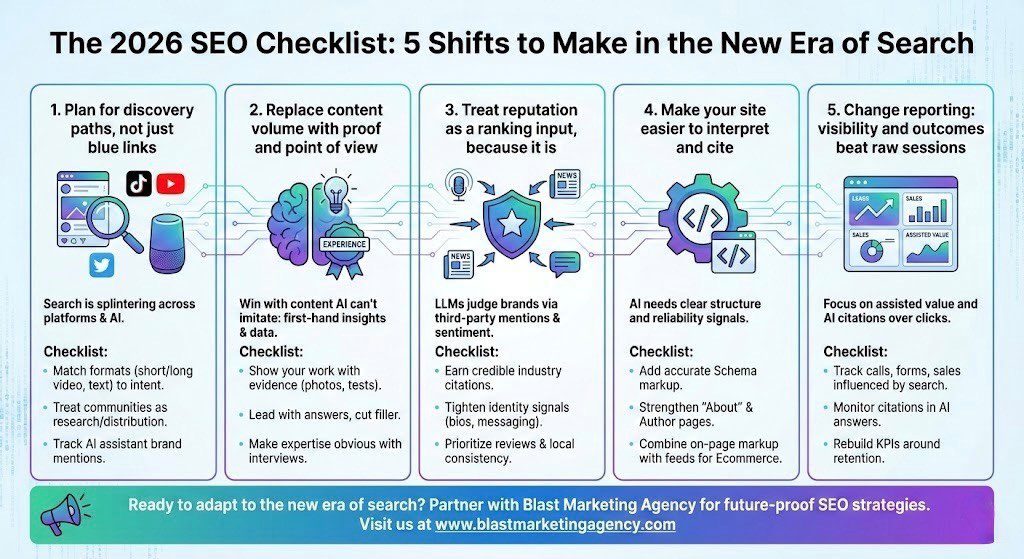
4) Make content easier to interpret and cite
Clarity pays twice: readers understand you faster, and machines extract the right meaning. Use headings that match questions, keep introductions direct, and cite sources for claims that need support.
Structured data helps as well. Google says it uses structured data to understand page content and to show it in richer ways in search results.
What to do:
- Use appropriate schema types (Article, Organization, Product, Local Business, FAQ Page) and keep them accurate.
- Validate markup and fix errors that affect eligibility for rich results.
- For ecommerce, keep product information consistent across page text, markup, and feeds.
5) Update measurement: outcomes beat raw sessions
AI features can reduce clicks on simple queries while still influencing decisions. Some publishers have raised concerns about referral losses as AI summaries expand.
Your job is to measure what matters to the business: leads, calls, subscriptions, and sales influenced by organic discovery, plus whether your brand gets cited in AI answers.
What to do:
- Track conversions and assisted conversions from organic search.
- Review which pages appear as sources in AI experiences, then improve the ones that introduce you poorly.
- When priorities clash across teams, an experienced SEO consultant can connect technical fixes, content planning, and reporting so everyone pulls in the same direction.
Frequently Asked Questions
1) What is the biggest change in SEO by 2026?
Search is no longer just “rank and win.” You need visibility across AI answers, video, communities, and results. Your site still matters, but it’s one touchpoint in a longer path.
2) Are AI Overviews always bad for publishers?
Not always. They can reduce clicks on simple questions, yet they also highlight sources. Pages that answer follow-up questions, show evidence, or offer tools can still earn traffic and leads.
3) How should small businesses prioritize SEO measures with limited time?
Start with basics that compound: consistent listings, strong reviews, one excellent service page per offer, and a small set of posts that answer real customer questions. Add a video when you can.
4) Does structured data guarantee better rankings?
No. It helps systems understand what’s on a page and can unlock richer displays. Treat it like clear labeling, not a shortcut. Focus first on accurate content, then mark it up.
5) What should I do if my traffic drops but sales don’t?
Don’t panic. Track conversions, calls, and qualified inquiries. If those hold steady, your visibility may be working even with fewer clicks. Shift reporting toward outcomes and the channels that drive them.